A decodable story matches what your child knows
A story is decodable when most of its words can be read with phonics skills your child has already learned. A child who knows the sounds in cat, mat, and sat can meet those words in a tiny story and blend them from left to right.
Cat sat on a mat.
Cat had a nap.
The sentences may be simple, but they give your child something important: a safe place to turn sounds into real reading.
Why decodable stories help
Learning letter sounds is only the beginning. Children also need practice using those sounds in connected text. Decodable stories bridge the gap between reading a word on a card and reading a sentence that means something.
- They encourage children to look all the way through a word.
- They give repeated practice with a newly learned sound or pattern.
- They help reading become more accurate and automatic.
- They let children experience the success of reading a whole story.
Evidence-based guidance for early reading recommends teaching children how sounds connect to letters, how to decode words, and how to read connected text every day. Decodable stories bring those pieces together in a manageable way.
Decodable is not the same as predictable
The words are chosen to match phonics patterns the child knows. The child is expected to look at the letters and blend the sounds.
The sentences repeat a pattern that may invite the child to remember the sentence or use the picture instead of reading each word.
Pictures should make a story warm and understandable, but they should not be the main way a child figures out a word. When children meet an unfamiliar word, their first habit should be to look at the letters.
Instead of asking, “What would make sense here?” try:
“Look at the first sound.”
“Slide through the whole word.”
“Now read the sentence again.”
A good decodable story is more than a list of words
The phonics pattern matters, but meaning matters too. A useful early story should be simple enough to decode and clear enough to understand.
Look for stories that:
- focus on a sound or spelling pattern your child has learned;
- repeat that pattern enough for useful practice;
- limit unfamiliar or irregular words;
- use natural sentences whenever possible;
- give you something small to talk about after reading.
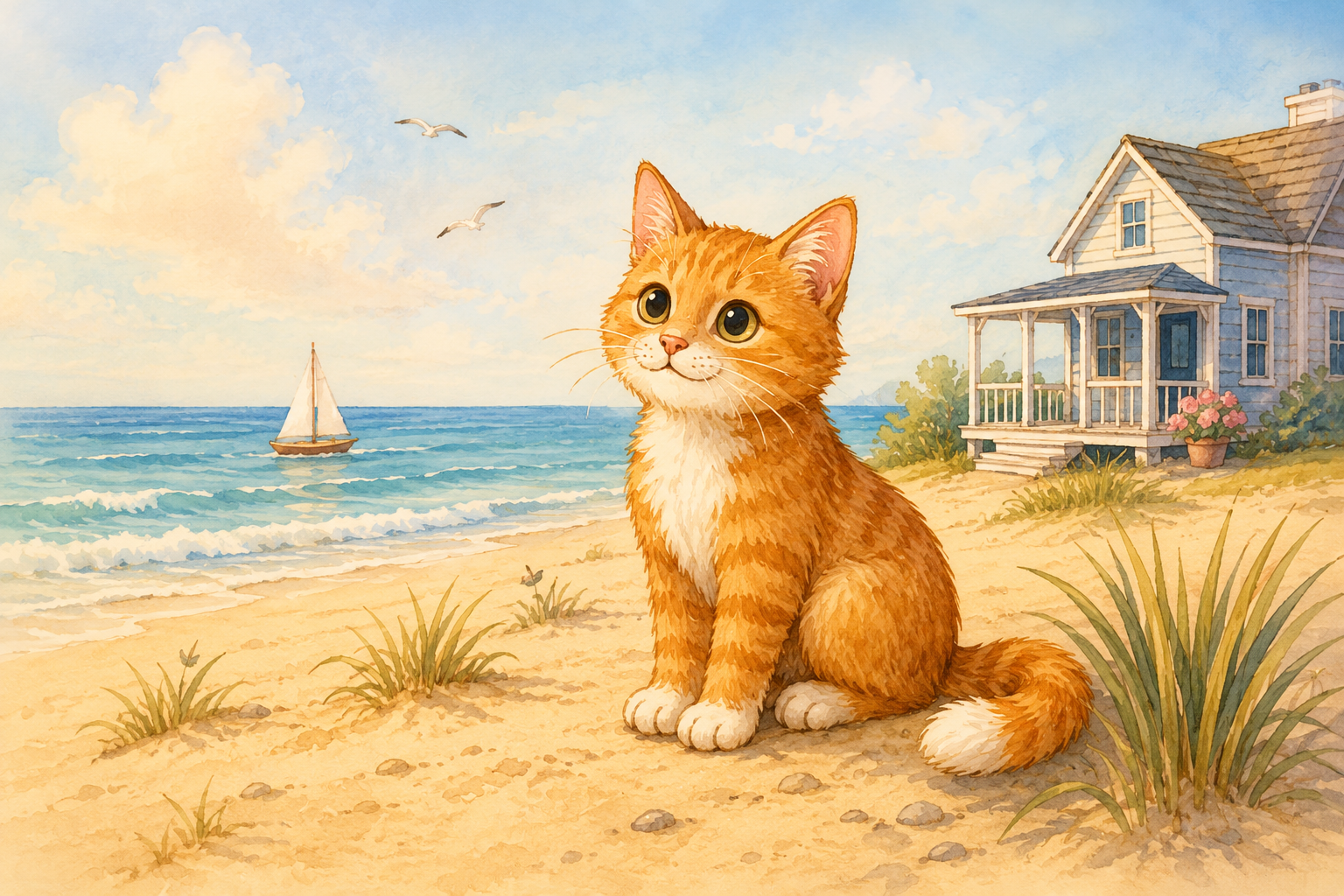
Beach Cat lessons keep the target small
Each Learn To Read Stories lesson follows one calm rhythm: hear one sound, practice a few words, read one tiny story, and stop.
A short-vowel lesson might practice cat, mat, and sat. A later lesson might focus on sh in shell and fish.
For focused short-vowel practice, start with our Short A stories, then practice each sound individually with Short E stories, Short I stories, Short O stories, and Short U stories.
What about words that cannot be sounded out yet?
Even carefully written decodable stories need a few common words such as the, was, or said. These are sometimes called tricky words or heart words.
Tell your child the word when necessary, point out any part they can recognize, and return to the sentence. One unfamiliar word should not turn the story into a test.
“This word is was. The first sound is /w/. This is a word we are learning by heart. Let’s read the sentence together.”
Decodable stories are practice books, not the only books
Beginning readers still need rich picture books, funny read-alouds, poems, nonfiction, and stories with beautiful language. Those books build vocabulary, knowledge, imagination, and love of reading.
You can think of the two kinds of reading as having different jobs:
- Your child reads decodable stories to practice phonics and build independence.
- You read richer books aloud so your child can enjoy ideas and language beyond their current reading level.
There is no need to choose one or the other. Beginning readers benefit from both.
How to read a decodable story together
- Warm up: Review the target sound and two or three example words.
- Preview: Tell your child any tricky words they will meet.
- Read: Let your child look at the letters and blend the words.
- Support: Give a calm sound-based prompt when needed.
- Reread: Read the sentence or tiny story once more for smoother reading.
- Talk: Ask one easy question about what happened.
- Stop: End while your child still feels successful.
What parents can do tonight
Choose a lesson from the Reading Path that matches your child’s current level. Practice only the sound and words shown in that lesson. Then read the tiny story once or twice.
Not sure which level fits? Use the quick questions on Start Here before choosing a lesson.